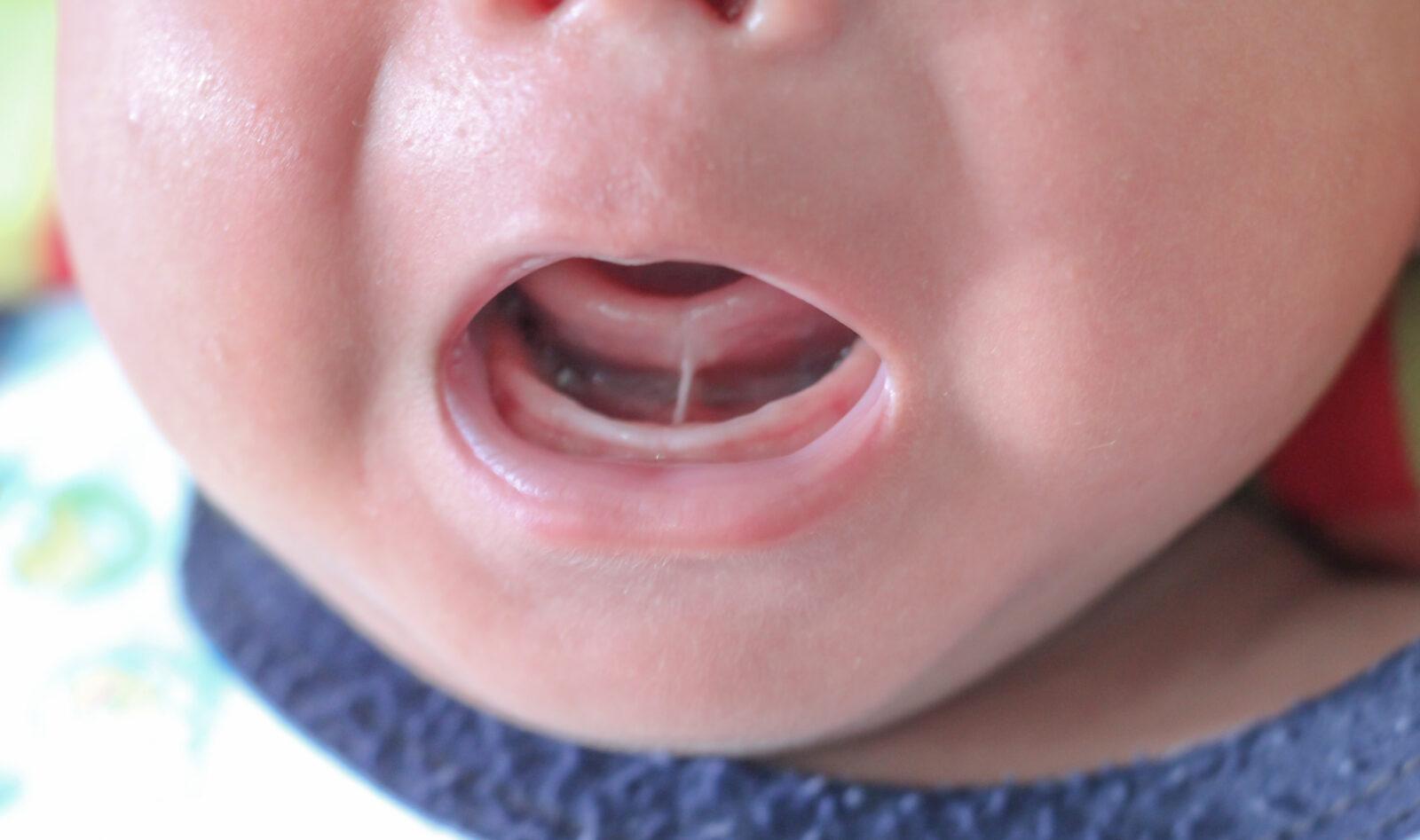
Tongue tie is a medical condition that people are born with and can cause issues for babies and adults alike.
But how does tongue tie vary in adults and newborns and what treatments are available to tackle tongue tie? Our experts explain all there is to know in this informative blog, so keep reading!
What is tongue tie?
Ankyloglossia, more commonly known as tongue tie, happens when the band of tissue that connects the bottom of the tongue to the floor of the mouth is too short or tight, limiting its movement.
Tongue tie affects both babies and adults, but what are the symptoms in each?
Symptoms of tongue tie in adults
Here are some of the signs of tongue tie in adults that you may be unaware of:
- Difficulty sleeping, including snoring, teeth grinding, sleep apnoea, and more
- Slow eating
- Struggling to swallow tablets
- Issues with speech, like mumbling and stuttering
- Neck and shoulder tension
- Breathing problems, such as mouth breathing
- Headaches or migraines
- Reflux

While tongue tie in adults may reduce their quality of life to an extent, surgical treatments are available in a hospital environment – they’ll need to speak with their GP for more guidance. Even without surgery, the symptoms of adult tongue tie are manageable.
However, for newborns, tongue-tie can be a significantly more impactful condition.
Symptoms of tongue tie in newborns
3-10% of newborn babies are born with tongue tie, so it’s more common than you may assume.
Anatomical symptoms of tongue tie in babies include:
- Limited motion when moving and sticking out the tongue
- A heart-shaped tongue
Newborns who have tongue tie often exhibit the following behaviours:
- Losing their latch while breastfeeding
- Taking small amounts of milk while being fed
- Feeding for a long time, and often
- Dribbling during feeding
- Making a clicking sound when bottle-feeding, or coughing

Other indications could be your baby struggling to gain weight or even be losing weight and mothers feeling pain during breastfeeding
As a result of tongue tie restricting the mobility of your newborn’s tongue and the feeding issues caused, this condition can prevent them from gaining all the nutrients they require. So, it’s important to treat the problem as soon as you can.
Treating tongue tie in newborns
Is your little one showing signs of tongue tie? Or maybe you’re unsure? If so, we can help here at our established tongue tie clinic.
The earlier you spot the signs of tongue tie in newborns the better – babies up to 4 weeks old can be treated at our tongue tie clinic in Brentwood, helping them to live comfortably and free from stress.
After an initial assessment, we’ll thoroughly explain our findings and offer the most suitable treatment for their needs. Usually, this issue can be fixed with a small medical procedure that involves snipping the tissue between the tongue and the bottom of the mouth to lengthen the frenum and free the tongue.
Make an appointment for your newborn at our tongue tie clinic
If you think your newborn may have tongue tie, book an appointment at our tongue tie clinic today so our specialist can assess them.
Or, if you’d like to speak directly to a specialist for further information, you’re more than welcome to call our tongue tie clinic on 01277 205 605 for more guidance.